
Wednesday, March 23, 2011
Reading Log for 2011
1. After Dark, My Sweet by Jim Thompson (1955) 5/5
 Having read The Killer Inside Me some years ago and having done more researching into the life of Thompson than reading any more of his actual material I decided to finally dig back in and now the man is 2 for 2. I've got a sneaking suspicion that nobody in his novels is even remotely close to a decent human being; sociopaths, psychopaths, alcoholics, drug addicts, opportunistic scum, a few of those are found in this taut and phenomenal work involving a mentally unbalanced ex-fighter, an alcoholic widow with a mean streak that would make a badger wince in fear and a crooked (ex?) cop out for one big score. Nobody trusts anyone, everyone is trying to fuck someone else over. What marks this as something more than just another pulp novel is the ending; poetry has never been so prominent in pulp.

Sincerity (1939, Mikio Naruse)
Rating: 5/5

Let me just start by saying that though I absolutely love the films of Ozu and Mizoguchi, and of course Kurosawa, it continually pains me to a certain degree that Mikio Naruse is not nearly as well know as the 3 big hitters of classic Japanese cinema. His technical capabilities are just as well honed as theirs; perhaps its his regularly surfacing sense of extreme pessimism and sometimes nihilism that keeps the Japanese from exporting more of his films (after all, about 50 have survived.)
He's just as interested in the then modern Japanese family as Ozu, just as willing to explore societal concerns as Mizoguchi (and might be considered even more of a feminist if it weren't for his perpetual sense of futility in resistance, most notably in When a Woman Ascends the Stairs.) His ability to tell a story is just as marvelous as Kurosawa's. So the question remains, why don't more Americans know Naruse? I really don't know, but with Criterion's recent Eclipse set of silent Naruse films perhaps there's a glimmer of hope for this master to gain more notoriety among American cinephiles.
1939's Sincerity clocks in at only 67 minutes yet it displays all the hallmarks of great Naruse; namely the everlasting conflict between the hypocrisy of adults and the easily corrupted innocence of youth & class status and its effect on the relationships choked by its confines. Two young girls, one from a rich family & the other from a poorer family where there is only a mother and a grandmother, go to school together where one is at the top of her class (the poor one) and the other, the rich girl, is in the 10th spot in class.
As the story unfolds its revealed that Tomiko's father at one time was quite fond of Nobuko's mother who was at the time married to a man who Nobuko's grandmother informs the young girl was a no good drunkard; we're left to make up our minds as to the integrity of this missing man as Nobuko's swears he was a wonderful man and, as previously stated, her mother holds the opposing viewpoint. An event occurs that brings the two would-be lovers together, glances are exchanged and thanks are given in the form of a French doll (an item which causes a briefly lived stir in Tomiko's house.) But in the end all go back to their lives, except for the father who has been shipped off to fight in the war. There is no real point in struggling against an existence that has so firmly planted itself into the daily lives of all those involved.

Let me just start by saying that though I absolutely love the films of Ozu and Mizoguchi, and of course Kurosawa, it continually pains me to a certain degree that Mikio Naruse is not nearly as well know as the 3 big hitters of classic Japanese cinema. His technical capabilities are just as well honed as theirs; perhaps its his regularly surfacing sense of extreme pessimism and sometimes nihilism that keeps the Japanese from exporting more of his films (after all, about 50 have survived.)
He's just as interested in the then modern Japanese family as Ozu, just as willing to explore societal concerns as Mizoguchi (and might be considered even more of a feminist if it weren't for his perpetual sense of futility in resistance, most notably in When a Woman Ascends the Stairs.) His ability to tell a story is just as marvelous as Kurosawa's. So the question remains, why don't more Americans know Naruse? I really don't know, but with Criterion's recent Eclipse set of silent Naruse films perhaps there's a glimmer of hope for this master to gain more notoriety among American cinephiles.
1939's Sincerity clocks in at only 67 minutes yet it displays all the hallmarks of great Naruse; namely the everlasting conflict between the hypocrisy of adults and the easily corrupted innocence of youth & class status and its effect on the relationships choked by its confines. Two young girls, one from a rich family & the other from a poorer family where there is only a mother and a grandmother, go to school together where one is at the top of her class (the poor one) and the other, the rich girl, is in the 10th spot in class.
As the story unfolds its revealed that Tomiko's father at one time was quite fond of Nobuko's mother who was at the time married to a man who Nobuko's grandmother informs the young girl was a no good drunkard; we're left to make up our minds as to the integrity of this missing man as Nobuko's swears he was a wonderful man and, as previously stated, her mother holds the opposing viewpoint. An event occurs that brings the two would-be lovers together, glances are exchanged and thanks are given in the form of a French doll (an item which causes a briefly lived stir in Tomiko's house.) But in the end all go back to their lives, except for the father who has been shipped off to fight in the war. There is no real point in struggling against an existence that has so firmly planted itself into the daily lives of all those involved.
Wednesday, March 16, 2011
2011's music; Ranked & Rated
1. Moonsorrow - Varjoina kuljemme kuolleiden maassa 5/5
 As epic in scope as any past album; Moonsorrow, to me, are like Robert Bresson; anything they touch will be at least a 4/5, so that the new album is beyond phenomenal is no surprise. Fanboy? Nah, just an admirer of brilliantly crafted anthems.
2. Mogwai - Hardcore Will Never Die, But You Will 4.5/5
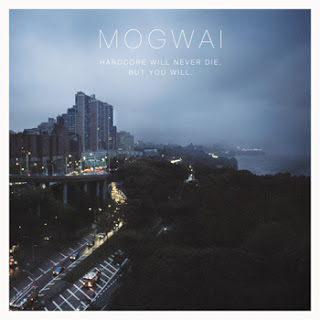 Not as simultaneously blissful & devastating as Happy Songs for Happy People its still a top notch album; beautiful sweeping guitars, haunting piano & some highly memorable bass lines make for yet another absolutely magnificent album from Scottish boys.
3. Rotten Sound - Cursed 4.25/5
 Nasum is gone and they're never coming back, so with Cursed Rotten Sound seem like they're the forerunners for their replacement (Granted RS came to be only one year after Nasum's inception.) Ferocious, fierce and relentless grindcore of the angriest order.
4. Crowbar - Sever the Wicked Hand 4.25/5
 More of a devoted EYEHATEGOD fan in the past few years I've clung more to Crowbar on account of EHG's indefinite absence from the scene. The best description of the band came form Beavis & Butt-Head where one of them said "This music is slow and fat." If by fat they mean heavy then certainly the band hasn't let up in the 10 + years they've been together. Some thrashier moments find their way in a few of the songs, but they're still churning out sincere songs of isolation and heartbreak.
5. Defiled - In Crisis 4.25/5
 We're only in the middle of March but I can guarantee that in terms of sheer brutality no album will come close let alone match the newest effort by these Japanese death metal masters. My mouth fell open and my eyes bugged out on numerous occasions in reaction to just how brilliantly brutal this album is.
6. Amon Amarth - Surtur Rising 4.25/5
 Initially this was more of a 3.5 album, but it gets an extra .75 after a few more listens. It starts off with enough ferocity to get one excited for the proceeding tracks, but by the time the last 2 tracks come along, not to neglect the System of a Down cover, its sort of petered out. Where as "...And Soon the World Will Cease to Be" was a phenomenal closer to what I consider to be their best album "Doom Over Dead Man" just doesn't have the same epic impact.
7. Screeching Weasel - First World Manifesto 4/5

I'm completely unfamiliar with Ben Weasel's output between Anthem for a New Tomorrow and his latest release I'm willing to bet that this is probably one of his best most fresh sounding outputs in those 18 years. The speed found on My Brain Hurts hasn't really held its place, but the sense of melody and a knack for hilariously bitter and biting lyrics is still in full force.
8. Burzum - Fallen 3.5/5
 Eh, it's Varg, big deal. Not as entrancing as 2010's Belus it isn't a bad album but there really isn't anything remarkable here, folks.
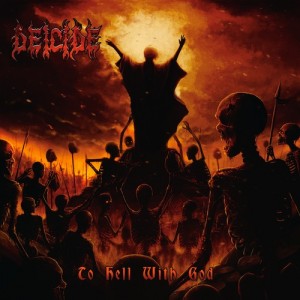
9. Deicide - To Hell With God 2.75/5
 Deicide. One of the most inconsistent bands in the history of American death metal hasn't released a genuinely phenomenal or important album in almost 2 decades. With To Hell With God, yet again, there's no new ground and at this point Benton is such a joke that its almost embarrassing to know that he A.) exists and B.) takes himself with complete and unflinching seriousness. There are some decent moments, and some good songs, but nothing great or above good can be found on this album.
10. Weedeater - Jason...the Dragon 2.5/5
 When did Bongzilla start writing shorter songs? Waaaiiit a minute, this isn't Bongzilla, its their little brother Weedeater. Their 2002 album Sixteen Tons was pretty much completely forgettable but 2011's Jason... the Dragon is a slight improvement. Its heavy, there's no doubting that, but there isn't really anything memorable going on here. In a world full of bands like this what makes them different or special? Nothing, really.
11. Decoder - Decoder 2/5
 Is this supposed to be a concept album or something? Either way, I don't really care. It starts off promisingly enough but then sinks into total mediocrity. I keep debating whether or not they'd be decent as an instrumental band as both vocalists are subpar and unoriginal but even without vocals this would still be bottom rung stuff. I'm sure chicks dig this shit, though.

2. Mogwai - Hardcore Will Never Die, But You Will 4.5/5
3. Rotten Sound - Cursed 4.25/5

4. Crowbar - Sever the Wicked Hand 4.25/5
5. Defiled - In Crisis 4.25/5

6. Amon Amarth - Surtur Rising 4.25/5

7. Screeching Weasel - First World Manifesto 4/5

I'm completely unfamiliar with Ben Weasel's output between Anthem for a New Tomorrow and his latest release I'm willing to bet that this is probably one of his best most fresh sounding outputs in those 18 years. The speed found on My Brain Hurts hasn't really held its place, but the sense of melody and a knack for hilariously bitter and biting lyrics is still in full force.
8. Burzum - Fallen 3.5/5
9. Deicide - To Hell With God 2.75/5
10. Weedeater - Jason...the Dragon 2.5/5

11. Decoder - Decoder 2/5

Night of the Hunter (1955, Charles Laughton)
Rating: 5/5

Remember the first time you tried to walk on your own? No? Yeah, nobody really does, but there were a slew of things that were a first that came after those pivotal steps that were most likely draining in varying respect and trying of every aspect of your persona; take most of these experiences and measure them up to having to make your major studio feature length directorial debut. Very few directors really genuinely get it right the first time; Lynch did with Eraserhead, Huston hit the nail on the head with his adaptation of Hammett's Maltese Falcon, and most notably Orson Welles did relatively well with what's now his best known, if, unfairly, his only really well known effort as director: Citizen Kane.
Then there's this Laughton guy. An actor who decides to give directing an adaptation of a book by the same name a shot. In the studio system of 1955 Hollywood you had to have quite a pair of balls to willfully make a film about a psychopath who dresses as a preacher with no reservations about hunting down two children with the intention of murdering them to get to the decent chunk of change their recently deceased father left them as a safety net.

Then there's the tattoos; HATE on the knuckles of one hand and LOVE on the other, he has no hesitation to divulge listeners to the epic struggle between the two base human emotions; but this is a man wholly without one and an ample amount of the other, how many other blatantly sociopath characters, dressed as preachers, can you name from an American film from the same time?
What?
None?
Yeah, I didn't think so. Mitchum's portrayal of Harry Powell, one of the most despicable human beings in the history of cinema, is so pitch perfect that if you were to have seen him walking towards you on the street chances are you'dve run for your life or just jumped in front of a speeding car.
The film, more or less, tanked on initial release; leading Laughton to proclaim his lifelong resignation from the director's chair: thanks general film going public and useless critics of 1955. Not only does the film contain one of the best performances of the 1950's, not that everyone else is lackluster it's just that this is Mitchum's film; everyone else is background music, it's also home to some of the most stunningly gorgeous black and white cinematography since somebody decided to film a garden scene in 1888. Dually influenced by Film Noir and the German Expressionist, which gives the film its feeling of a Grimm fairy tale, films there are more memorable scenes in this one film than in the vast majority of a lot of other directors entire filmographies.
Of all films to compare this now established American classic (ain't that the way it always goes; film gets released, no one cares, 20-40 years later it's hailed as a work of art.) it, in a sense, resembles Tobe Hooper's Texas Chain Saw Massacre because, without really spoiling Hunter there is a happy ending but the two children have gone through so much hell that it was most likely a concrete impossibility for them to grow up into mentally stable adults, sort of like Harry.
Avalance (1937, Mikio Naruse)
Rating: 5/5

(originally written December 15, 2009)
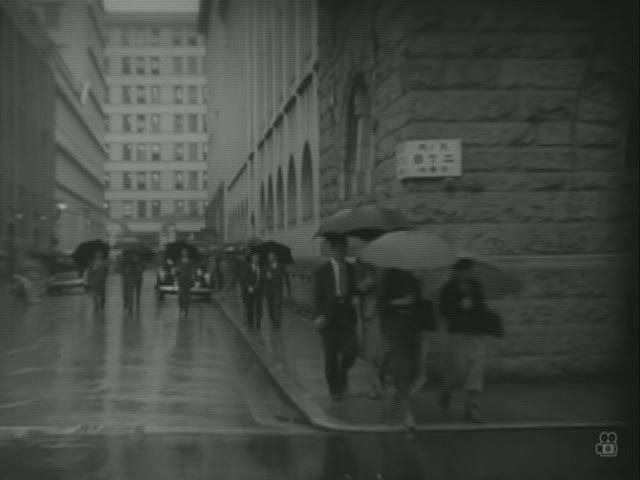
This is the 2nd Naruse film I've seen and I'm slowly and steadily falling in love with the man; he's got a way of observing people, woman in particular (which only two films into his filmography I feel he does better than Mizoguchi), that is so simple and fluid. There's a subtle underlying idea of futility to the actions of all his main characters; they can choose to do something, but chances are it won't work out and they'll either die or end up continuing on with their old ways. This film strengthens this theory; a spoiled rich boy, I'll call him a boy because that's what he acts like, who is completely oblivious to the feelings of all those around him marries a woman that he doesn't care about at all and then coldly turns around and demands from his father that he be allowed to get a divorce; when the younging is talking to his dad he almost sounds like something Oshima would say to an older Japanese male at the time; questioning societal norms, ethics and morals.
(originally written December 15, 2009)
This is the 2nd Naruse film I've seen and I'm slowly and steadily falling in love with the man; he's got a way of observing people, woman in particular (which only two films into his filmography I feel he does better than Mizoguchi), that is so simple and fluid. There's a subtle underlying idea of futility to the actions of all his main characters; they can choose to do something, but chances are it won't work out and they'll either die or end up continuing on with their old ways. This film strengthens this theory; a spoiled rich boy, I'll call him a boy because that's what he acts like, who is completely oblivious to the feelings of all those around him marries a woman that he doesn't care about at all and then coldly turns around and demands from his father that he be allowed to get a divorce; when the younging is talking to his dad he almost sounds like something Oshima would say to an older Japanese male at the time; questioning societal norms, ethics and morals.
Three Resurrected Drunkards (1968, Nagisa Ōshima)
Rating: 5/5

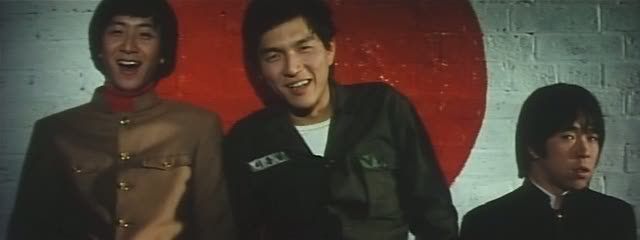
I know Oshima is well known, to those who know more about him than just that he's the dude who made that movie with Japanese penis and mutilations, etc, as someone who seems to hate every filmmaker other than himself but his 1968 film seems almost like an ode to Godard, Buñuel and to a lesser extent Resnais; 3 students are on the beach and decide to go for a swim, they strip themselves to their undies and head for the water, leaving their threads behind, when a hand reaches up from underneath the sand to steal their, I'm presuming, Japanese military outfits, leaving two of the three of them with a few yen and the clothes of *GASP* Koreans. Like with Death by Hanging, I don't know which came first as they were both released in '68, Oshima takes a look at the Japanese prejudice against Koreans and the impact this has on Koreans living in Japan; this leads the three main characters on one fantastically witty journey, only to kill them off at the 40 minute mark (in an 80 minute film); they're, you guessed, resurrected & they go through, basically, the same routine as in the first 40 minutes of the film, with some changes to the story on account of this time they know what's going to happen to them which only adds to the comedy revolving around the reactions to those who are not in the know.
There's also a moment in the film where the three main characters, played by some sort of Japanese pop band from the time, are walking the streets of, I'm assuming, Tokyo asking random people if they're Japanese, and they come to find that everyone they ask is Korean, when asked why they're Korean they simply reply, all of them, "because I am".
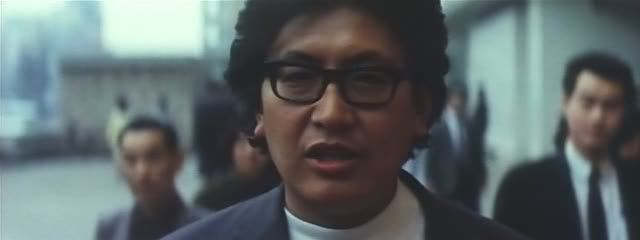
And guess who shows up to declare his Korean......ness? The man himself:

I know Oshima is well known, to those who know more about him than just that he's the dude who made that movie with Japanese penis and mutilations, etc, as someone who seems to hate every filmmaker other than himself but his 1968 film seems almost like an ode to Godard, Buñuel and to a lesser extent Resnais; 3 students are on the beach and decide to go for a swim, they strip themselves to their undies and head for the water, leaving their threads behind, when a hand reaches up from underneath the sand to steal their, I'm presuming, Japanese military outfits, leaving two of the three of them with a few yen and the clothes of *GASP* Koreans. Like with Death by Hanging, I don't know which came first as they were both released in '68, Oshima takes a look at the Japanese prejudice against Koreans and the impact this has on Koreans living in Japan; this leads the three main characters on one fantastically witty journey, only to kill them off at the 40 minute mark (in an 80 minute film); they're, you guessed, resurrected & they go through, basically, the same routine as in the first 40 minutes of the film, with some changes to the story on account of this time they know what's going to happen to them which only adds to the comedy revolving around the reactions to those who are not in the know.
There's also a moment in the film where the three main characters, played by some sort of Japanese pop band from the time, are walking the streets of, I'm assuming, Tokyo asking random people if they're Japanese, and they come to find that everyone they ask is Korean, when asked why they're Korean they simply reply, all of them, "because I am".
And guess who shows up to declare his Korean......ness? The man himself:
Ann Inn in Tokyo (1935, Yasujirō Ozu)
Rating: 5/5
 This is, without a doubt, one of Ozu's unsung masterpieces & a film that requires immediate viewing from all cinephiles who enjoy his other, more well known, works; not only that, but it is simply one of the best silent films I've ever seen, with performances that are beyond phenomenal (the children are just as above par as the adults), and it's also just one of the best films I've ever seen period. A man struggles for about 1/2 the film to find any kind of resources to feed his two boys, and it is this masterful depiction of poverty and its effects on the psyche that lead me to believe that this is one of the finest silent films, and film in general, that I've ever seen or am likely to see.

Subscribe to:
Comments (Atom)